
Fauna
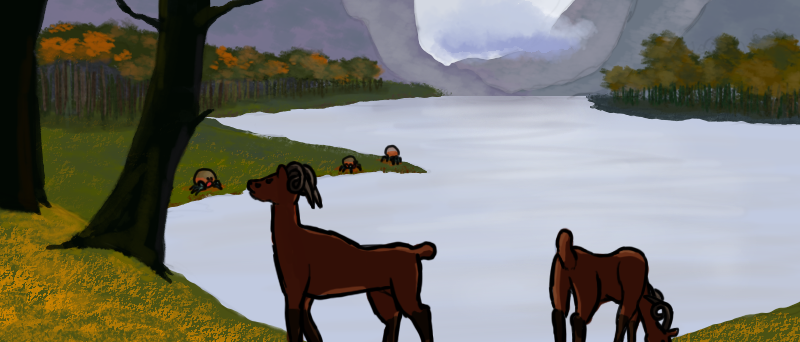
Fauna, or animals, can be found across Parallelium from the long low-plains to the volcanic foothills, and even inside lava caves and vents. Much like other regions in Omneutta many fauna are docile creatures, though some are hunted or farmed for sport and/or resources. Since the dominant sentient species of the space are made from molten material, there are few species of fauna that are aggressive by nature.

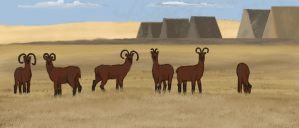
Aganeihat (ahg-ahn-ei-haht) have been observed to avoid pori and other Sentient Species with some purpose, though the behavior has evolved over time as pori culture has changed. Omneuttians who farm outside Parallelium’s city-centres reap the benefit of aganeihat softening and stirring up soil generations ago, and some attempt to invite the herds before sowing their field(s). The species are mostly herbivores, and have been observed to have a preference for a particular mineral. These are found in crystals formed in the pores of rocks by gas escaping from vents through the ground above layers of magma. There are three known variations, with the main variation dwelling around the base of volcanoes, though the Calderic variation moved further up the slopes of volcanoes, and Grassland have moved out into the plains away from cities.
Read More:
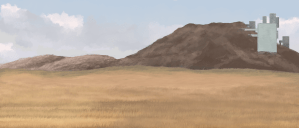

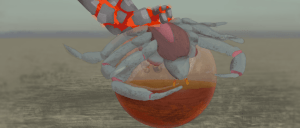
What few pori live outside cities or find themselves outside cities due to work have been known to consume airlrhil (aihrl-rihl) for sustenance. The mixture is less nutritious than real molten material but more so than rocks or mineral deposits. The most notable characteristic on the six-legged crustaceans are the spherical pouch on their back. As they consume steam from vents, minerals are heated by enzymes on the interior of the pouch to produce a substance similar to lava while the pouch remains relatively cool on the exterior. Pekataro and Daekoiz are also known to prey on the species, though they eat different parts of their bodies.
Read More:
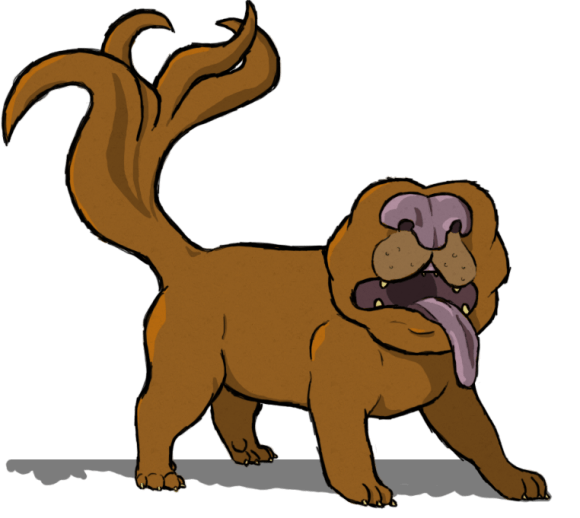
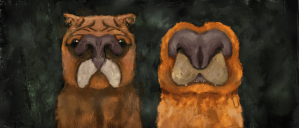
Cukalls (chuh-kahls) have been domesticated generations ago by the pori for use in settlements of all sizes. The species has been bred to track down by smell eggs of pori, so that eggs can be raised for the next generation of pori. Their eyes have been bred away in favour of their large noses that take up the majority of their face—it is these noses and their already strong sense of smell that find eggs. Additionally, their tails split into several ends and are able to wiggle and curl independantly. Cukalls were domesticated not long after the Timekeeping Reset from a similar species in the eastern reaches of Parallelium, though as part of the domestication process the other species was reduced to extinction.
Read More:
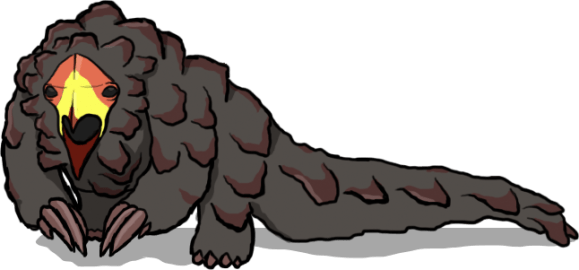
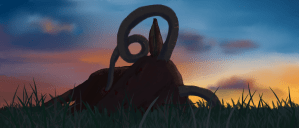
Early in pori history, daekoiz (dA-koyz) were believed to be aspects of Porrair, guarding volcanoes from the threat of potential unsustainable use by the Poria. Pori are made from the daekoiz’s preferred food source—molten material—and have been its prey for much of history. Due to their thick plating, even modern weapons are largely ineffective, and caution is highly advised for pori around volcanoes. Large stone-esque plates form a modular exoskeleton, but they are notable for their bright beaks. These beaks are capable of withstanding the molten material they eat, keeping the rest of their bodies safe from direct contact. If no molten material is present they have been seen to hunt airlrhil for their lava-like substance. It is not known how they reproduce or any specifics of their life cycle, though it has been recorded that a single daekoiz can live for at least three hundred years if most of that is spent in hibernation.
Read More:
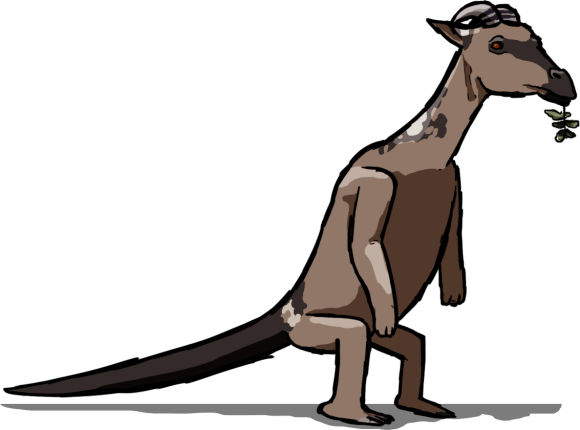
Danapounc (dah-nah-pOnch) have been observed as unwilling to traverse volcanic terrain; for centuries the animals had few encounters with pori. They are the only animals that eat a specific species of tree’s leaves and as a result carry seeds and pollen with them inadvertently during migrations, spreading the trees through Poria-Space. Their long necks and tall stature distinguish them from nearly every other species in Parallelium. In addition to their long necks, danapouncs have another odd feature: a pair of pawed forelegs and a pair of long-clawed hind legs. Their tail is roughly the length of their hind legs to aid balance when standing and climbing trees.
Read More:

A small species of canids, pekataro (peh-kah-tarh-roh) live in packs all across Parallelium. The species as a whole mostly prey on aganeihat and danapounc. Though only recently understood to be burrowing and not roaming packs, pekataro are rarely seen by pori and other sentient species. Somewhat of an exception is the calderic sub-species, who do not burrow but instead live around volcanic rock, using their dark coat to blend in when sneaking up on their prey.
 Skeli'n Studios