
Fauna
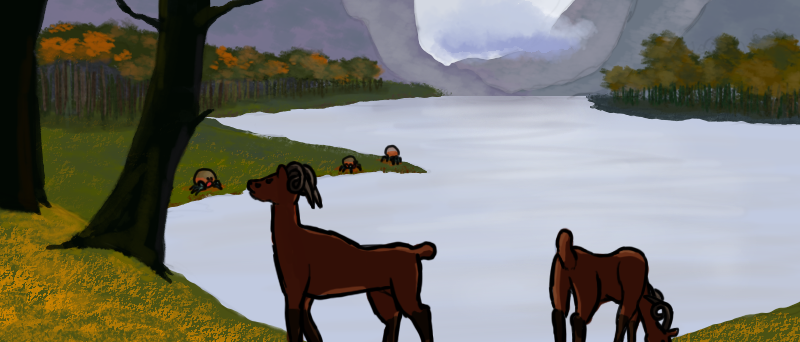
Fauna, or animals, can be found across Parallelium from the long low-plains to the volcanic foothills, and even inside lava caves and vents. Much like other regions in Omneutta many fauna are docile creatures, though some are hunted or farmed for sport and/or resources. Since the dominant sentient species of the space are made from molten material, there are few species of fauna that are aggressive by nature.

Aganeihat (ahg-ahn-ei-haht)
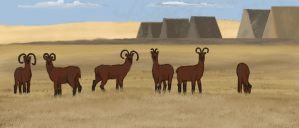
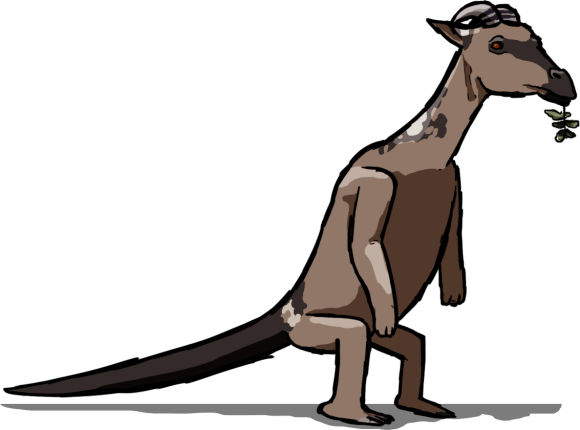
These hoofed creatures grow horns that spiral and eventually pierce their skin, and for centuries pori believed these creatures immortal as this does not kill them, even after decades of the horns growing into their skin. When pori moved from volcanoes to cities on the plains, this pushed the Aganeihat out of their natural habitat and created two variations, the Calderic (darker) and Grassland (lighter), and it is speculated the original variant still exists on unpopulated planet-stars across Paralleium though the variations are superficial. As non-pori move into Parllelium, it has been documented that the soil conditions that Aganeihat herds leave behind produce fertile farmland.
Read More:

Airlrhil (airhl-rihl)
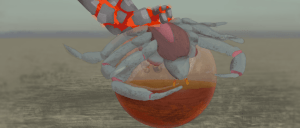
Unknown to pori culture or records before the cultural move of cities to the plains, airlrhil are small creatures whose back pouches contain something similar but less nutritious than molten material pori feed on, though it is a significant improvement from consuming volcanic rocks or processed metal. Daekoiz are known to hunt the crab-like animals for the contents of their pouch, and pekataro have been observed hunting them for everything else.
Read More:
Cukalls (chuh-kahls)
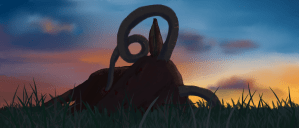
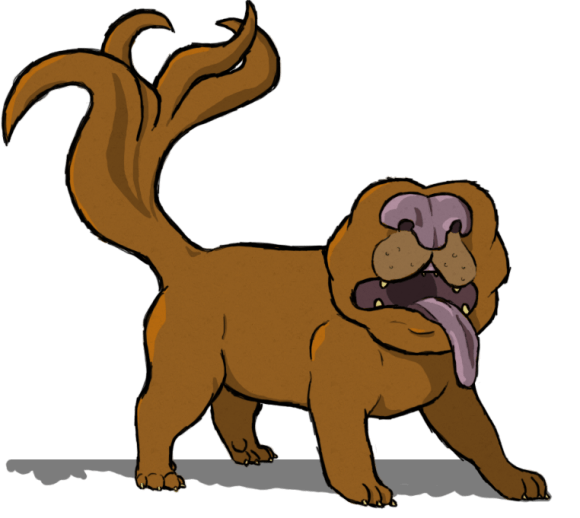
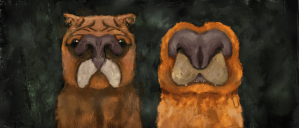
Cukalls have been bred from a now-extinct animal that was larger, more wild, and had eyes. While some may say the cukalls is a domesticated species, it would be more accurate to call it a service animal, as they are used exclusively to find and collect pori eggs and are not a pet in any sense. On the subject of senses, cukalls have a highly developed and keen sense of smell which is used to find eggs. The large nose that takes up much of their face was bred for to heighten their sense of smell, and it is unclear whether the eyes were bred out to make room for the nose, or if they disappeared first and breeders kept selecting larger nosed animals to maximize the utility of the animal.
Read More:
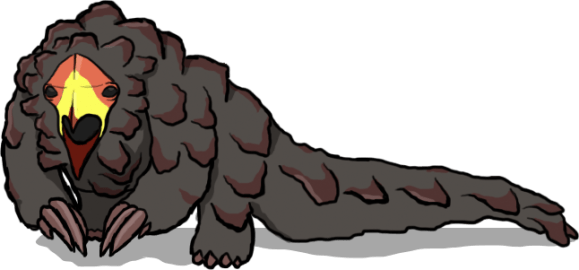
Daekoiz (dA-koyz)
While there is a recorded instance of a Daekoiz living for around 300 years, it is not known if all can do so, or if this is irregular. In fact, there’s little research into the daekoiz, other than that they consume molten material. This can be from lava flows, from airlrhil pouches, and even pori. Due to this information it was believed for centuries that daekoiz were created by Porrair to be stewards of the environment, keeping pori from overusing the molten resources of their environment. However, this belief has largely faded, and there was no evidence from the Po to support it.
Read More:

Danapounc (dah-nah-pOnch)
There is not much recorded information about the Danapounc, as they have a skittish temperament similar to aganeihat and stay away from pori and researchers alike. One particular observation is that danapounc seem to repeatedly avoid traveling across volcanic surfaces, going out of their way to travel around any across parallelium, and have been observed keeping their gaze on a specific point in the distance as they travel around the terrain. It is unknown why they travel around, as they possess all the physical features to navigate physical obstacles on the terrain, so it is speculated that it may be the terrain itself.
Read More:

Pekataro (peh-kah-tarh-roh)
Like the aganeihat, there are two known sub-species of this animal in the Calderic and Grassland variations. It is believed that the grassland pekataro is much more populous. Both sub-species were believed to be roaming animals, but it is now known that the grassland pekataro are in fact a burrowing animal, with a pack of over a dozen being able to fit in the same network of burrows. All pekataro have both been observed hunting airlrhil for the meet in their bodies and legs, and are careful to avoid the contents of the pouches.

