
Factions
Groups of Omneuttians can coalesce into a faction when they have a shared goal or methods to achieve different but connected goals. There are two groups of factions, Governments, which include governments across Omneutta, local governance, groups who view themselves as opposed to those groups, and Guilds. Guilds are more loosely organized than governments, but are often more tightly-knit and function as both community and employment.
Governments
Egur-InStitute
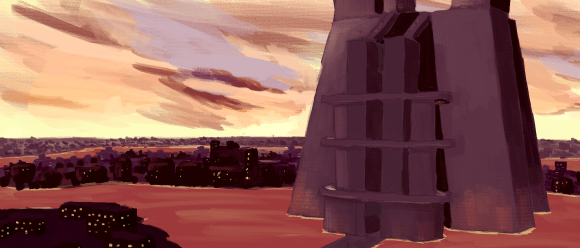
One of three institutes across Parallelium, the Egur institute was the last of the three to be founded. From the proposal in 365 AT to ratification in 384, the institute opened with a limited research department in 398. Egur Institute generally focuses on cultural and historical matters, and has three main departments: Ethnology, Archaeology, and Biosciences.
The Ethnology department explores different cultural patterns and phenomena, how they change over time and place, and within social contexts. The Archaeology department attempts to examine more about Omneutta’s past, to develop a further understanding not only of the time before recorded history, but to find what has been lost since. The Biosciences department conducts research on flora and fauna, in addition to the biologies of each sentient species so that all may be further understood.
As with the other two Institutes, the Egur Institute is overseen by the appointed System Head. Though there is a director of the institute, they are themselves subject to any directives from the System Head, as the Institute is the principle educational directive of the entire system.
Omni-Lata AdHocracy
The Omne-Lata Ad-Hocracy (often shortened to O.L.A.H. or OLAH) is the main governing body of Omneutta After Time. As their name states, they are an Ad-Hoc form of government, meaning that the organization formed out of necessity, rather than a strict constitution or formal occasion. A detailed record of the founding of the Ad-Hocracy was not kept, and as such details of the event and organization have been lost to the general public for some time. In similar fashion, the public has little reliable information about the structure of OLAH, and the remaining contents of this article may not be accurate or up-to-date.
The organization has released that its overarching goal is to operate “in the best interests of Omneuttians” and at one point split into divisions to help it reach that goal. For a few centuries it was well known that each Sentient Species sent a member to govern on The Council, but it is no longer known if The Council still has authority over the Ad-Hocracy as a whole or are figureheads. The Divisions of Authority, Abidance, and Adherence were at one point staffed with Representatives who did not leave the Ad-Hocracy and Delegates who could; the Divisions dealt with creating laws, interpreting laws and the consequences for breaking them, and apprehending those who are believed to have broken the laws.


Lyenn
It is widely believed now that insectoid-creatures known simply as Enforcers have replaced the Delegates of the Division of Adherence. It is not known if the functionality of Omneuttians serving in other Divisions has been replaced.
Lyenn are used as a police and military force throughout Omneutta beginning sometime in the late 700s or early 800s, AT Their use as a police force is limited to both space and land patrols, often in areas designated by OLAH as needing ‘protection’ from those who break the law, or areas that have recently seen a large crime. Enforcers can sometimes accompany Delegates to their meetings with Omneuttians.
Not much is known at this time about the Lyenn before their use as Enforcers by OLAH. Lyenn and Lyennfich make up what are commonly referred to as Enforcers, as most Lyenn seen around Omneutta travel with a Lyennfich, seen to the left. The two species are closely related, both being covered in hard chitin, with some soft tissue exposed–on the Lyenn this is seen in their lower legs and arms and on the Lyennfich’s underbelly. The species seem to have a mutually beneficial symbiosis as unarmoured Lyenn are almost exclusively seen with a Lyennfich which are in turn exclusively seen with unarmoured Lyenn.
The Resistance
An anti-OLAH organization loosely assembled around Omneutta, not much is known about it outside of its inner circle. It is known that they operate on an invite-only basis, to reduce or prevent detection by OLAH and the Enforcers.

Guilds

The Gallants
In the mid-first century After Time a turth named Yscnajow formed a traveling band of warrior-philosophers under the name “The Gallants”. The traveling band grew larger, and as they moved around Omneutta to settle conflicts as part-investigators-part-judges, Gallants began to stay behind across The Known Universe to train others in their ways, and erected Halls to serve local communities.
When the Omni-Lata Ad-Hocracy formed, The Gallants were briefly employed by the bureaucracy as well as local omneuttians. Over time and due to a number of factors including OLAH’s use of Enforcers, the number of Gallants and Halls has decreased to the point where of less than 20 halls by the early 800s. Modern Gallants are still called upon and paid as hired muscle, investigators, and often times a mix of the two. Since the advent of the Halls and Yscnajow’s eventual death, the Gallants no longer have any central leadership, with each Hall’s Reuk tasked with communicating amongst each other.
Read More:


Pale Swords
Now disbanded, the Pale Swords were once both a mercenary and investigative force comprised almost entirely of avocs that were located in the southern reaches of Pale Shores. Much like the Gallants, they would take problems the community brought forth and work towards solving them. The most notable of all the Pale Swords was the young avoc, Mis’Kelin.
Read More:


Pirates
Piracy is believed to have begun in Omneutta sometime in the 400s of After Time. This time brought a rapid increase in the number of omneuttians with access to space-travel. Omneuttians were generally more wealthy than at any previous point in history, presenting a long list of potential targets. Would-be pirates also had more widespread access to the technology to put themselves in space. Subsequently, there were more vessels in space worth being robbed, and more pirates capable of doing so.
The goal of a pirate, their captain, and their crew is simple: acquiring wealth in whatever means necessary. For most pirates this means operating a ship and either attacking targets in open space, or stalking a ship or target and attacking when landing or departing. Pirates have no known organizational structure, meaning that there is no overarching leader or known centralized location. Rather pirates seem to move from one planet-star to another in search of towns or establishments where they can operate with impunity.