Fauna
Pale Shores is notable for the quick transitions from seashore to mountains, and animals across Pale Shores are found in every nook and cranny. There are few animals that avocs have to fear, though many need a careful eye-socket to keep track of, else they’ll run off with your stuff, food, or even the clothes off your back.
Akkigavou (ahks-I-gah-voo)
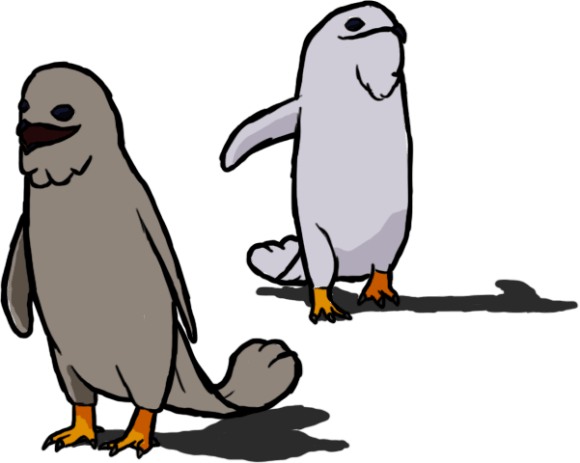
Centuries ago, akkigavou were hunted for tail feathers however there is no record or surviving folklore to indicate why. These flightless birds hunt the same fish as devtalnu, but in the cold season when the tusked behemoths are sleeping. Generally, they can be spotted in trees, and glide down by spreading their tail feathers out to slow their fall.
Read More:


??? Akkoure (ahks-ooh-reh)
A yet-to-be-named sub-species of Akkoure found only in the deserts of dry Pale Shores, on the leeward sides of mountain ranges. This sub-species only reaches the size of a malta akkoure cub. They constantly overcoat fur so thick that local avocs thought it was vegetation until proven otherwise.
Read More:

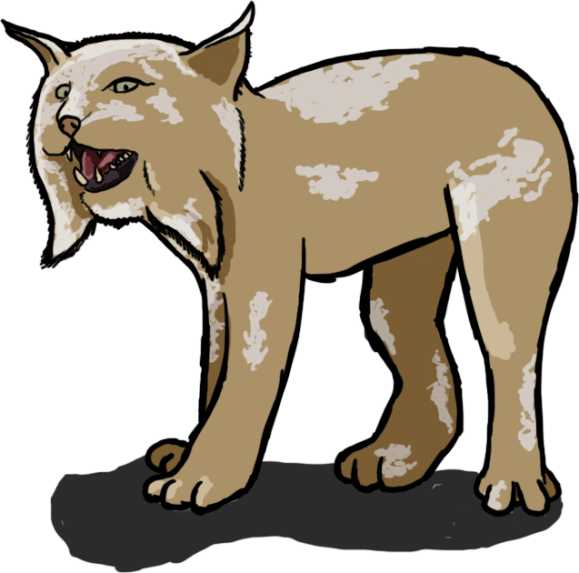
Malta Akkoure (mahl-tah ahks-ooh-reh)
Most commonly thought of when avocs mention the akkoure species, as it is the most populous sub-species in most of Pale Shores. This sub-species is seen only around the colder reaches of mountain and glacial forests, and with its patterned coat, is difficult to spot until it is too late.
Read More:
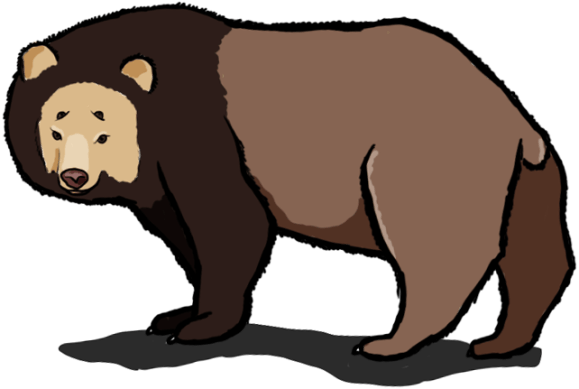
Bapuva (bah-puh-vah)
These large but relatively docile animals hibernate in dens during the cold season, eating copious amounts of fish and small animals to build up fat reserves. In harsh cold seasons, they have been observed aborting their hibernation and looking for food before the warming season. In these situations, extreme caution is advised.
Read More:

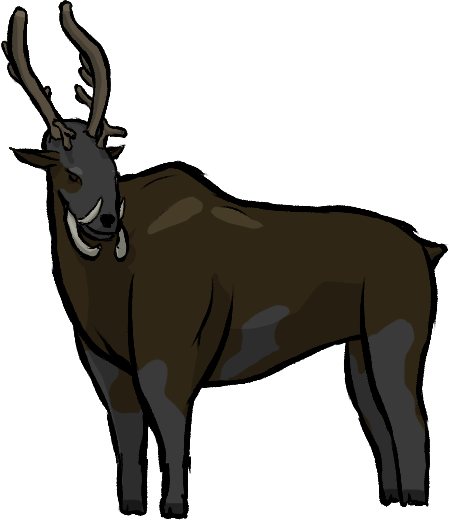
Cervidu (sehr-vI-duh)
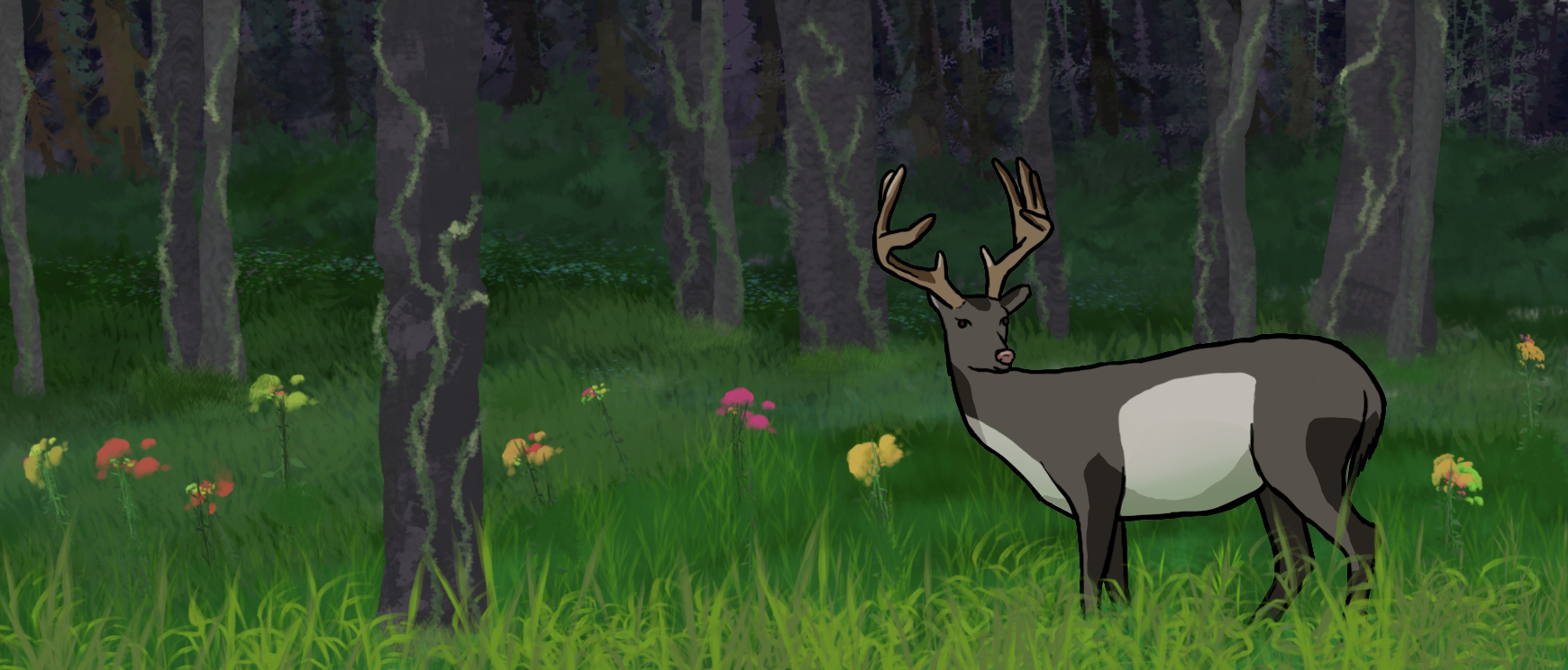
Long-since domesticated, these beasts of burden now eat the fruit and grain byproducts of the lands they work. Across much of Pale Shores, these animals are seen plowing farms, or in some communities, dragging avoc around on carts for leisurely transportation. As metalwork has become more common, their antlers are no longer used for tools, but cervidu too old to work are still butchered for their meat which can be kept farmers or sold.
Read More:


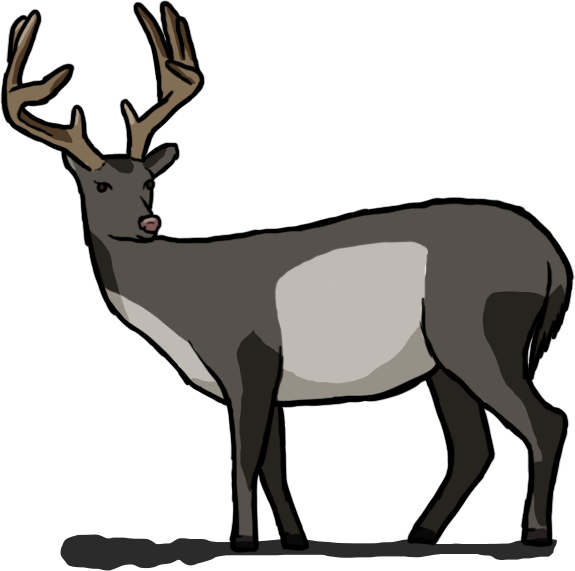
Cervugi (sher-vuh-gI)
Known to be related to the cervidu but not exactly how, the cervugi may be the still-wild animal that the cervidu descended from prior to domestication. Like the cervidu, their antlers were at one point used for tools though this practice is now uncommon. As they prepare for hibernation in the cooling season, female cervugi have been seen fighting for food and the land it is on.
Read More:
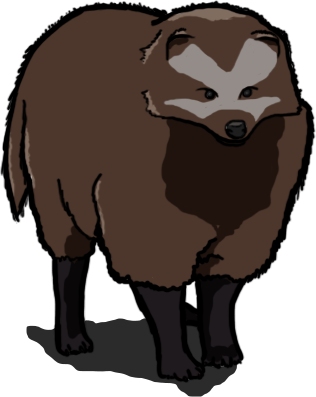
Cranipxum (crahn-I-psuhm)
There are records from centuries ago of hunts targeting the cranipxum, though it is not clear why. In modern times, many avoc cities take care of a filee (fI-eh-lE), or a communal group of these animals, to keep them out of their food supplies. Outside cities, farmers employ many methods to keep them away from their plots and storage.
Read More:
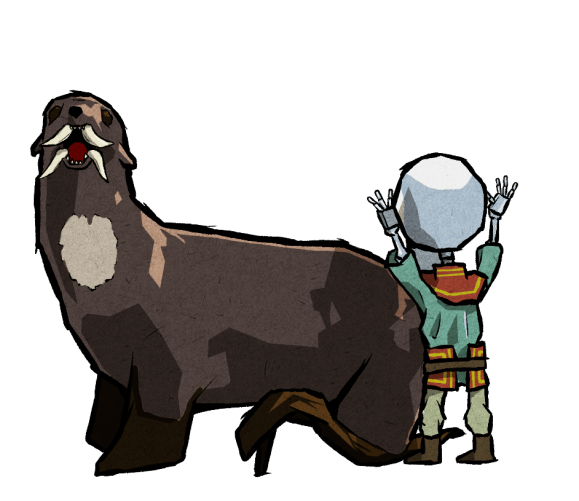
Devtalnu (dehv-tahl-nuh)
In a practice that used to be more common in past centuries across Pale Shores, devtalnu are still hunted for their meat certain areas. They hunt the same fish as the akkigavou, but in the warm season to avoid competition. This provides most of the bulk to survive the cold season, but they will hunt other small animals with their two sets of tusks if the animal is slow enough and the devtalnu are hungry enough.
Read More:
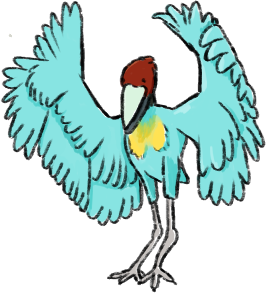
Foumri (foohm-rI)
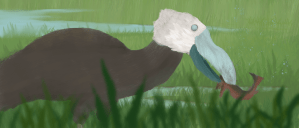
The avoc Ve’Akki first suggested using Foumri to protect their fledgeling farms, and now this bird is seen across almost the entirety of Pale Shores. In the wild, they walk through specific plants in low lying waters to cover their legs with specific powder from the plants, then use that powder to attract and hunt fish in deeper waters. Significantly larger than avocs, foumri use their beaks, wings, overall size, and shrieking calls to scare off would-be predators and pests.
Read More:

Whyr (whur | vyihr)
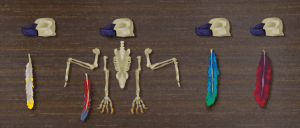
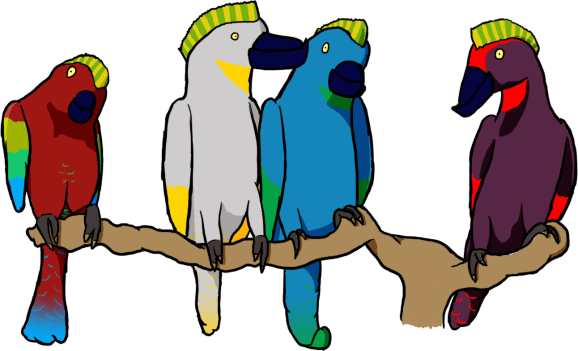
Four closely-related species—each one is slightly different, but they can all be dangerous to avoc. Red whyr eat mostly insects and fruit, but are smart enough to open some doors to get into food storage. Blue whyr are omnivorous, mostly eating cranipxum and marnma, though they will plunder food storage like the rest if given the chance. White whyr are exceedingly rare and skittish, but will attack if they feel threatened and can pick up and carry avoc. Their small populations may be due to hunting for tail features in centuries past. Purple whyrs have been known to hunt young avoc, and are also known as blood whyrs due to their red feathers and almost entirely carnivorous diet.